
The GPS Blind Spot alert is used to notify users when the device detects a GPS blind spot condition. This helps identify situations where the device temporarily loses or regains GPS visibility.
Parameters Considered (Prerequisites)
-
Device: The connected device must support the GPS Blind Spot alert and transmit the corresponding event to the platform.
How to Configure
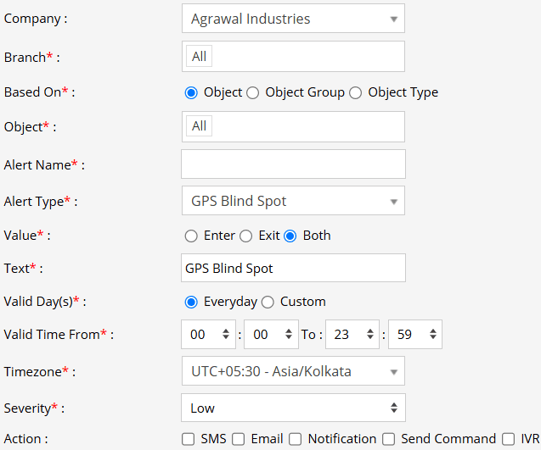
- Select the appropriate Company and Branch for which the alert is to be configured.
- Based On: Choose on what you want to base the alert configuration (Object, Object Group, Object Type).
- Object: Select individual vehicles for whom you want the alert to generate.
- Object Group: Select a group of vehicles for whom you want the alert to generate.
- Object Type: Select vehicle or object type for whom you want the alert to generate.
- Select the required Object, Object Group, or Object Type based on the selection made in the previous step.
- Enter an Alert Name for identification of the alert.
- Select GPS Blind Spot from the Alert Type dropdown.
-
Under Value, select when the alert should be generated:
- Enter: Generates the alert when the object enters a GPS blind spot.
- Exit: Generates the alert when the object exits the GPS blind spot.
- Both: Generates the alert when the object enters and exits the GPS blind spot.
- In the Text field, enter the message that will be displayed when alert is triggered.
- Enable Consider History Data if the alert should also consider historical data received from the device while evaluating the event.
- Select the Valid Days, Everyday or Custom.
- Everyday: This alert will be triggered, everyday in case of a violation in accordance to these parameters set.
- Custom: Mark the checkboxes of the days, when you want this alert to be triggered for. (eg., Sun, Mon and Sat)

- Enter the Valid Time From and To to define the time period during which the alert should be active.
- Select the required Timezone. The alert will be evaluated according to the selected timezone.
- Select the Severity of the alert (Low, Medium, or High).
- Under Action, select the required method for receiving the alert:
- SMS: To receive an alert by SMS, enable the checkbox, enter the phone numbers.
- Email: To receive an alert by Email, enable the checkbox, enter the recipients of the email.
- Notification: To receive an alert on the system Push Notification, enable checkbox.
- From Users, select the users that will receive the notification.
- From Notification Sound. Select the sound from the drop-down that will be played for this notification.
- Send Command: To send a command when the alert is triggered, enable the checkbox & enter the command that is to be send.
- IVR: To receive the alert through an automated voice call, enable the checkbox and enter the required phone numbers.
- Click the Save 💾 icon to save the alert configuration.
Please Note: To receive alerts through SMS, Email or IVR, the respective API must be configured at the Admin, Reseller, or Company level.